S.G. Browne

How to Write Like a Writer

I’ve been asked about my writing habits a lot, as though I need to find a way to break them.

When do I write?
How often do I write?
Where do I write?

As to the WHERE question, it’s in my apartment, usually at my desk, sometimes on the couch on my laptop. But I can’t write in cafes. Too distracting. Even in my apartment, sometimes I put on my iPod to block out the street noise by listening to instrumental music like “Green Onions” and “Comanche” and “Single Serving Jack”.

Plus I don’t drink coffee.

As for the WHEN and HOW OFTEN, that’s a little more involved.

From October 1989 to midway through 2002, I more or less wrote every morning for two hours before going into work, whether that was as a waiter or a driver or an assistant producer or as an office manager. Two hours. Every day. And if possible, another two hours at night. Sometimes I gave myself the weekend off. During this time, I wrote three novels and more then fifty short stories.

In 2002, while editing my second and third novels (both supernatural horror novels that had garnered interested from two small press publications), I began to hate what I was writing. Writing became a chore. A grinding job. A tedious two hours of sitting at my desk and staring at the computer and realizing that the words coming out of my fingertips were absolute garbage.

This went on for several months, before I decided to stop writing. To stop sticking to my two-to-four hours of self-disciplined masochism a day. To stop being a writer.

I still wrote. Sporadically. In fits. Whenever the mood struck. But I didn’t go back to the books. I told the publishers that I wouldn’t be able to send them the manuscripts. I felt that I’d let a golden opportunity slip away.
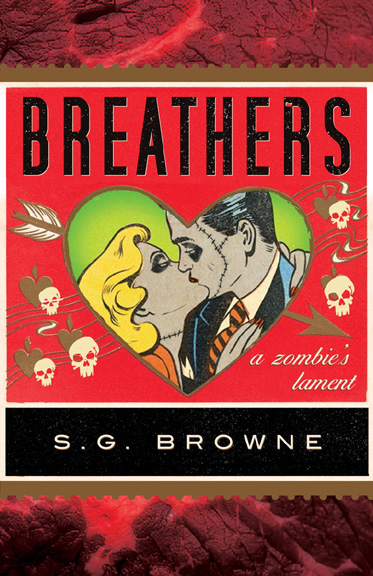
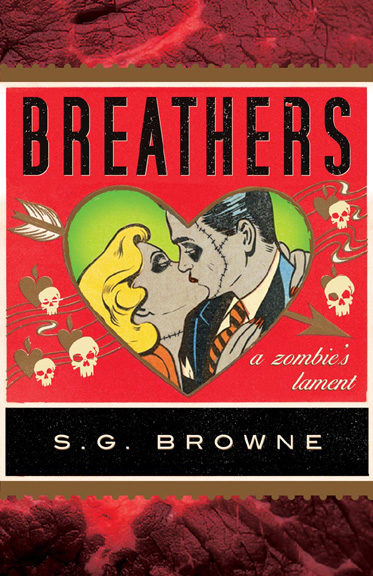
A year later, in October 2003, I started fiddling with an idea based on my short story, “A Zombie’s Lament.” I wrote a few chapters. Then I didn’t write. Then I’d write some more. Not sticking to a schedule. Not forcing myself to sit down for two hours before work or after dinner. Just whenever the mood struck. This went on for the next two-and-a-half years. Writing for weeks at a time, then doing nothing for a month or so. Binge writing. Like binge drinking. Only without the bar tabs or the hangovers. Until I finished my book in May 2006.

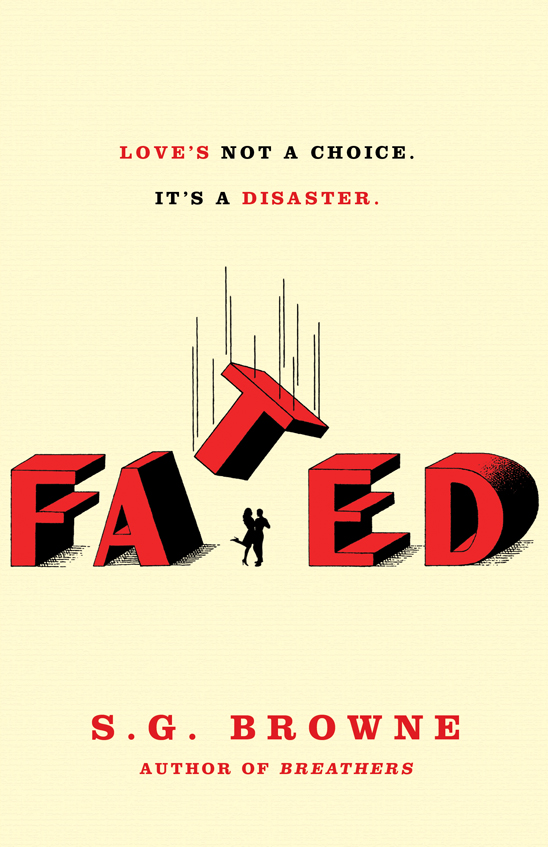
For the next six months after I’d finished Breathers I didn’t write at all. Nothing. Not a short story. Not a paragraph. Not a word. Then in December 2006, I started writing another novel about fate and destiny. For three months I wrote, at various times of the day, for various lengths of time. I didn’t stick to a schedule but just wrote whenever I had something to write. At the end of the three months, I’d written 45,000 words. Or approximately 180 pages.

Over the next ten months, I wrote sporadically, revising the book as I went, trying to figure out where it was going, giving up on it, coming back to it, forgetting about it, then finally realizing I needed to get it finished. By the end of December 2007, I’d written another 15,000 words.
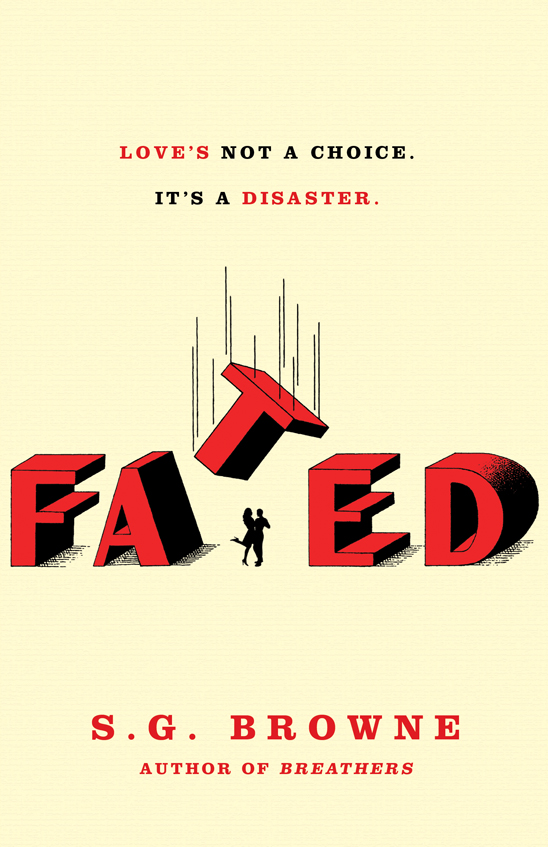
On February 2, 2008, a week after I received an offer from Broadway Books to publish Breathers and the day before the New York Giants beat the New England Patriots 17-14 in Super Bowl XLII, I finished the first draft of Fated. 80,000 words in fourteen months.

45,000 words the first three months.
15,000 words the next ten months.
20,000 words the last month.

How’s that for consistency?

Then, for the next eighteen months, I didn’t work on another major project. I edited Fated. I wrote a couple of short stories. I blogged. But I didn’t have a schedule. I didn’t commit myself to a set time or a set amount of words per day. I just wrote whenever it suited me. And I spent a lot of time promoting Breathers, which came out in March 2009.

In August 2009, I started working on another novel. Correction. Three novels. See, I had three ideas and I couldn’t decide which one I wanted to write, so I started writing all three of them at the same time. For a few days I’d work on one, then get an idea that worked better in the other, then get tired of that one and work on the third. It was like dating three women at the same time and trying to keep all of them happy.

I went back and forth like that for six months until I finally decided I really needed to commit to just one book. So I picked one and forged ahead, plucking a few paragraphs and pages out of the ether until, at the end of March 2010, I had about 30,000 words of my new novel, or about 120 pages. And it had taken me more than six months to get to that point.

Wanting to finish my novel before the Crypticon Convention in the middle of June, I created a writing schedule. Actually, more like a word count goal. 1000 words a day minimum. Six days a week. However long it took me to get those 1000 words. So for the next two months, I stuck to that schedule, writing 27,000 words in April and another 28,000 words in May and the first week of June, finishing the first draft of Lucky Bastard on June 5.

So as you can see, over the past twenty years or so, my writing habits have been kind of all over the map. I’ve done what has worked for me at different times in my life with various work ethics, but what matters is that I’ve been happy with the results.

Facebooktwitterredditpinterestlinkedinmail
Filed under: The Writing Life — Tags: , — S.G. Browne @ 6:01 pm

H is for High, Hitchhiking, and Heartshaped

Actually, that would be an interesting way to make your way across the country. Though I’m not really sure about the heartshaped part. Maybe that just means you’re full of love for mankind. Or else you’ve got some serious physical abnormalities.

Some titles that didn’t make the final cut for my favorite book titles that begin with the letter H include The Hobbit, Hocus Pocus, Hunchback of Notre Dame, and The Hunt for Red October. Come to think of it, I never read that last one. I just saw the movie. Which, admittedly, I do a lot.

On to the winners…

Best of the best:
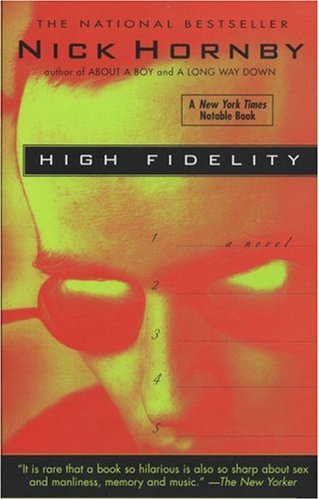
High Fidelity, Nick Hornby
Although I saw the movie first and loved it (I’m a big John Cusack fan), I thought the novel about a neurotic record collector and his failed relationships was an excellent read. Well-written, entertaining, funny, and populated with characters that I enjoyed getting to know. As far as first novels go, it doesn’t get much better than this.

Second best:
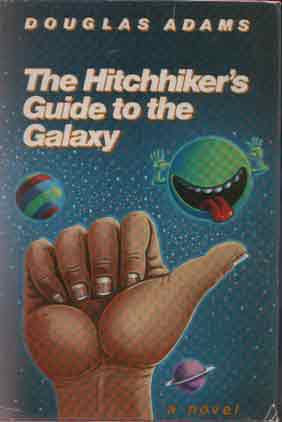
The Hitchhiker’s Guide to the Galaxy, Douglas Adams
Another instance where I saw the film before I read the book. While I haven’t read the other novels that comprise the rest of the story, I had a lot of fun with this, enjoying the premise and the social commentary and the humor, as well as the excerpts from the Hitchhiker’s Guide. And I have to say as far as the movie goes, Alan Rickman was the perfect voice for Marvin, the cynical and depressed robot.

Best of the rest:
Heart Shaped Box, Joe Hill
I don’t know if Joe Hill admits to the influence his famous father had on his writing, but for me, Heart Shaped Box is a chip off the Richard Bachman block. Bachman, of course, being the pseudonym of Stephen King, who tended to write a little darker and edgier and with a more feverish pace than King. This is probably the best horror novel I’ve read in the past five years.

Series of books I never got into:

Harry Potter, J.K. Rowling
I read the first few chapter of Harry Potter and the Sorcerer’s Stone, and then stopped. I found the concept of muggles and wizards more interesting than when Harry went to Hogwarts and the story ended up being all about the wizards. But then, I don’t have as much money as J.K. Rowling.

Facebooktwitterredditpinterestlinkedinmail
Filed under: Movies and Books — Tags: , , — S.G. Browne @ 10:09 pm

You Might Be a Douche Bag

douche bag or douchebag >noun 1 a device for washing out the vagina as a contraceptive measure. 2 a person, usually male, with a variety of negative qualities, specifically arrogance and engaging in obnoxious and/or irritating actions.

With respect to Jeff Foxworthy, I’ve put together a short list of people who I feel are good examples of douche bags. Or douchebags. Either way works for me. This list was prompted by my recent early morning bike rides, but I thought I’d expand it to include a few other examples.

-If you’re cycling side by side on the Golden Gate bridge and you don’t drop into single file for an oncoming cyclist, you might be a douche bag.

-If you wear a team racing jersey while cycling and you’re not on a cycling racing team, you might be a douche bag.

-If you’re a cyclist who gets mad at a car that almost hit you when you blew through a four-way stop sign, you might be a douche bag.

-If you’re a smoker who believes the sidewalk and the gutter are official depositories for your cigarette butts, you might be a douche bag.

-If you don’t understand the concept of using the ashtray in your car rather than throwing your cigarette butt out the window, you might be a douche bag.

-If you answer your cell phone in a restaurant while your date sits across from you picking at her dinner, you might be a douche bag.

-If you put your cell phone on vibrate but answer text messages while you’re in a movie theater, you might be a douche bag.

-If you invade a foreign country on the premise that they have weapons of mass destruction and it turns out they don’t, you might be a douche bag.

-If you deny your relationship with a White House intern by debating what the definition of the word “is” is, you might be a douche bag.

-If you’re the CEO of British Petroleum and you’re more upset about the fake Twitter account mocking your company than you are about your historic oil spill, you might be a douche bag.

Facebooktwitterredditpinterestlinkedinmail
Filed under: Just Blogging — Tags: , — S.G. Browne @ 8:35 am

G is for Great, Geek, and Ghost

We’re here just past the quarter way point through the alphabet and we hit the best collection of titles to date, including one of my favorite literary reads of all time and another book that I see on the Employee’s Favorites shelf at a number of bookstores.

Titles like Great Expectations, The Grapes of Wrath, and The Green Mile didn’t make the cut, while I’ve never read Gone With the Wind, The Godfather, or The Golden Compass. I did have to leave Good Omens off the list, but since I’m limiting this to the top three reads, sometimes I have to make some tough calls.

Though to be honest, the first two on this list were never in question. And the third was a seminal read in the early stages of my writing. So no real contest there, either.

On to the selections of my Favorite Books that Begin with the Letter G:

Numero uno:
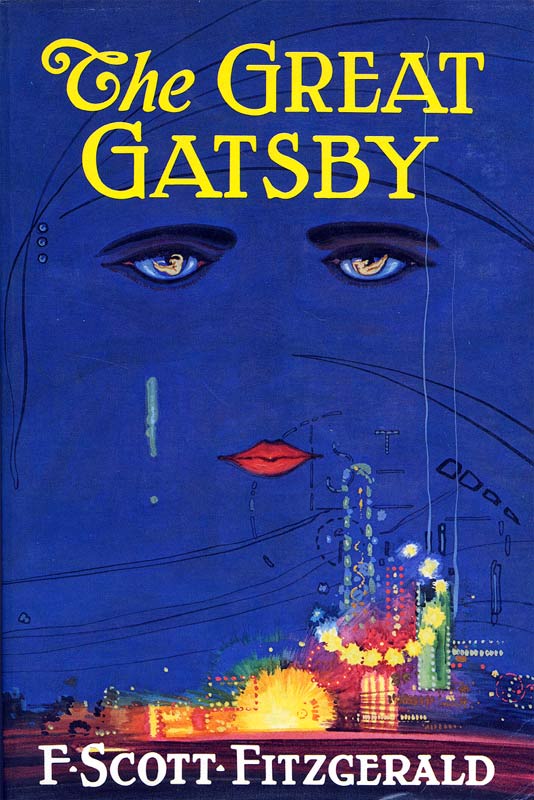
The Great Gatsby, F. Scott Fitzgerald
One of my favorite books of all time, Gatsby is often on the list of most over-rated novels of all time, but I loved the story and the characters and the eloquent, descriptive writing. A marked contrast to Hemingway’s stark prose, but a style I much prefer. If I ever find myself in the midst of reading uninspiring novels or stuck in my own writing, I will always pick this up and read through a few chapters to remind myself what good writing is supposed to look like.

Sloppy seconds:
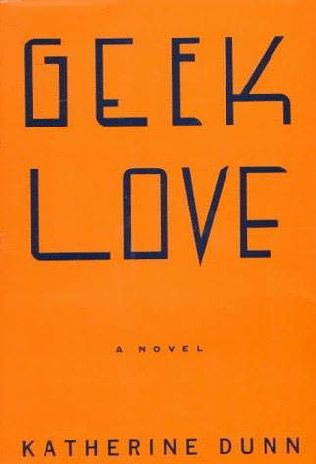
Geek Love, Katherine Dunn
The Binewskis are a married carny couple who set out, with the help of amphetamines, arsenic, and radioisotopes, to breed their own exhibit of human oddities in order to save their traveling carnival. Narrated by one of the children, this is the most unique dysfunctional family you’ll ever meet. Dark, perverse, and imaginative.

And baby makes three:
Ghost Story, Peter Straub
As I mentioned, this was one of the novels I read in the mid-eighties that inspired me to travel down the path that eventually led me here. My favorite novel by Straub, Ghost Story is one of those rare novels that is both chilling and beautiful.

Favorite monosyllabic book:
Green Eggs and Ham, Dr. Seuss
Actually, only 49 of the 50 words used in Green Eggs and Ham are single syllable, with “anywhere” being the anomalous offender. I wish I still had the copy I owned as a kid.

And as always, if you have your own favorites, feel free to share them.

Facebooktwitterredditpinterestlinkedinmail
Filed under: Movies and Books — Tags: , , — S.G. Browne @ 2:52 pm

F is for Fear and Fight and Fahrenheit

I can almost hear that as a cheer for some high school football team. “F is for fear and fight and Fahrenheit! Go Flames!” Or something like that. I don’t know. Maybe I’m reaching here.

As opposed to the Letter E, I’ve read a number of books that begin with F. Flowers for Algernon, False Memory, Franny and Zooey, and Freaky Friday, just to name a few. I’m embarrassed to admit that I have yet to read Frankenstein, but am not embarrassed to say that I’ve never read For Whom the Bell Tolls. If you’ve read some of my posts, you know I’m not a big fan of Hemingway. (See my second Classic Literature Razzie below.)

The top three on this list were pretty easy. Nothing else even came close. Though you might be surprised at what took the top spot:

Takes the gold
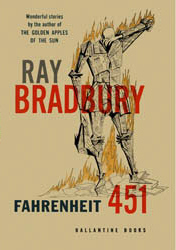
Fahrenheit 451, Ray Bradbury
Bradbury’s dystopian novel about a futuristic society that bans reading, discourages critical thinking, and has firemen that burn books is probably one of my top 50 books of all time. While it’s always been considered a commentary on censorship, Bradbury contends that it’s a story about how television and the mass media destroys our interest in reading literature.

fight-club-us-trade4Settles for silver
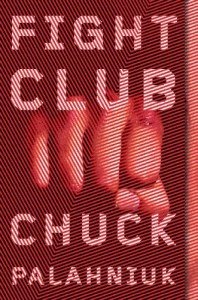
Fight Club, Chuck Palahniuk
This is one of those rare instances where I liked the movie better than the book. Of course, I saw the film first, which might have influenced me. Still, if you’ve never read Chuck, then there’s no place better to start than his debut novel about a main character who goes to extremes to regain his masculinity. Great social commentary on male bonding, capitalism, and the consumer culture.

Just happy to be on the podium
Fear and Loathing in Las Vegas, Hunter S. Thompson
The opening line and paragraphs alone are enough to include this here. This fast and furious, often surreal novel about the drug-induced pursuit of the American Dream almost made me feel like I was under the influence while reading it.

The second Classic Literature Razzie goes to:
A Farewell to Arms, Ernest Hemingway
I know Hemingway is credited with having a major influence on 20th century fiction with his unique writing style, but I just don’t care for him. Especially this novel, which is filled with run-on sentences, repetitive use of qualifiers, and frequent stretches of dialogue involving multiple characters with no indication as to who’s speaking. While I think you can get away with some of these transgressions in popular fiction, when it comes to classic literature, I guess I expect something more, I don’t know, literary.

Plus, the death scene at the end, where Catherine is in the hospital and the main character, Frederic, is trying to comfort her? I don’t have the book in front of me, but I recall the dialogue going something like this:

“I love you,” he said. “I love you. I love you. I love you.”
“And I love you.”
“I love you so much.”
“I love you.”
“I love you. I love you. I love you.”
“I love you.”

This book is my top Classic Literature Razzie of all time.

Facebooktwitterredditpinterestlinkedinmail
Filed under: Movies and Books — Tags: , , — S.G. Browne @ 8:37 am