S.G. Browne

What's Next: Live Video Chat - 5/23 at 6pm EST

Why Real Books Are Better Than eBooks

I know, I know. We’ve gone over this before. Real books vs. eBooks. Parts I, II, and III. All the sequels. All the reboots. All the remakes. So why am I dredging this up again? Because this is my blog and I can do whatever the hell I want. Plus I couldn’t think of anything else to write about.

I realize there are those of you who feel that a book is a book is a book, whether digital, audio, or hardcover. I disagree. I feel there’s a definite difference, just like there’s a difference between MP3s, CDs, and vinyl. When you go digital, you don’t capture the complete sound wave, losing richness and warmth that can’t be duplicated no matter how much remastering you do.

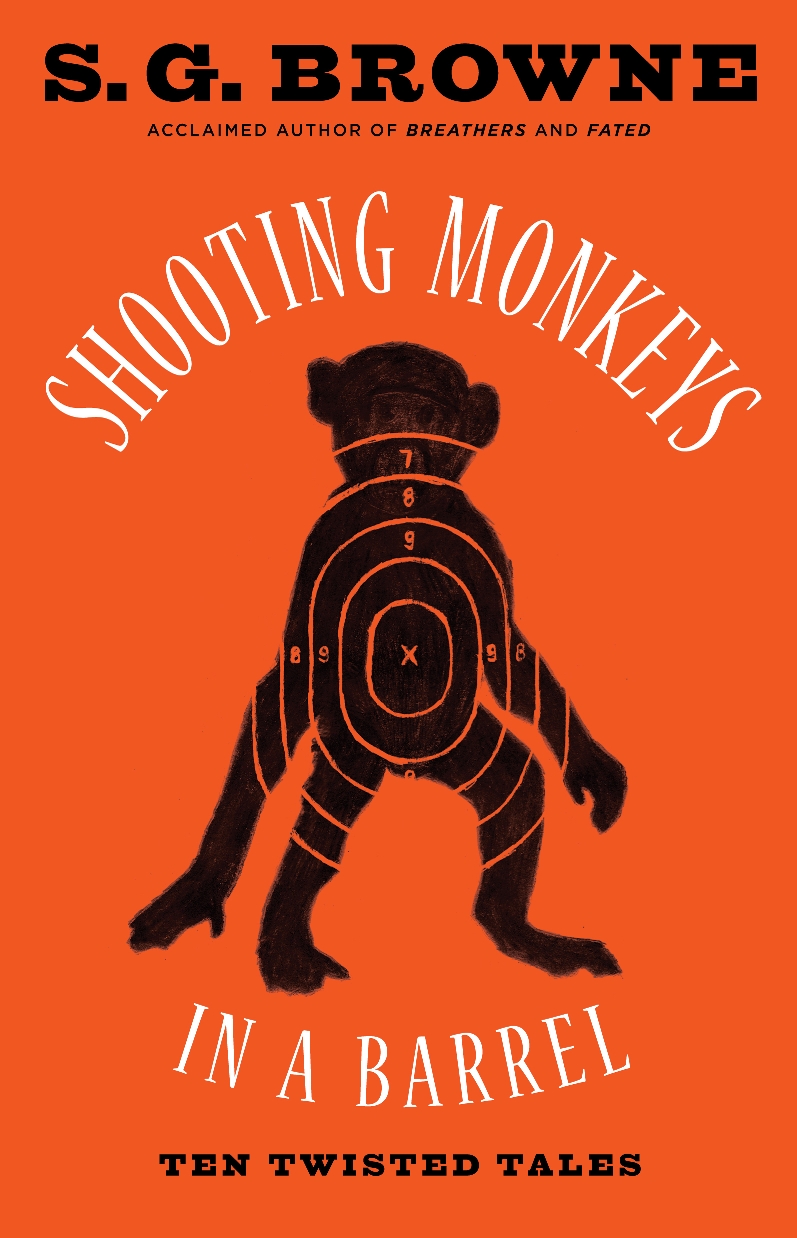
To me, it’s the same with books. Real books are warm while eBooks are cold. I realize eBooks are the future and that the future is now, but that doesn’t mean I have to like it. I also realize that as an author, I earn money from the sale of the electronic versions of my novels. I even have a short story collection that is only available as an eBook.

So I’m not here to say you shouldn’t buy eBooks. Buy books in whatever format you prefer. However, if you are an eBook fan, I encourage you to purchase eBooks from local independent bookstores who have partnered with Google. You can get eBooks for your iPad, Nook, Android devices, and Kindle Fire if you do a side load. At least that’s what I’ve been told. So support independent bookstores rather than Apple and Amazon.

Okay, that’s it for the eBook PSA. Now, without further ado, here are my 10 Reasons Why Real Books Are Better Than eBooks:

  1. Real books don’t run on batteries.
  2. If you spill water on a real book or drop it in the pool, it still works.
  3. Bookcases are windows into a person’s soul. When I go to someone’s house, I’m not going to browse through their Goodreads shelf or their iBooks library.
  4. You can’t sign an eBook.
  5. eBooks rob me of the thrill of seeing someone reading my book out in the wild.
  6. Real books are conversation starters. I’ve never seen anyone ask someone with a Kindle if they liked what they were reading.
  7. Real books have historical gravitas. They connect me with all of the writers who came before me.
  8. There’s no such thing as a Used eBook Store.
  9. You can’t own an eBook. You can only purchase a license that gives you the right to read it.
  10. Real books smell like home.

That’s my argument for real books vs. eBooks and I’m sticking to it. You can take my old-fashioned Luddite novel from me when you pry it from my cold, dead hands.

Filed under: Movies and Books,The Writing Life — Tags: — admin @ 6:50 pm

Fiction Friday: The Maltese Falcon

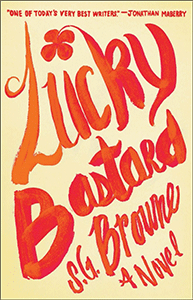
Welcome to the final installment of Fiction Friday – Lucky Bastard Edition, where I’m spotlighting the books that influenced the writing of Lucky Bastard. We wrap things up this week with the quintessential detective novel: The Maltese Falcon by Dashiell Hammett.

Naturally, the quintessential detective novel deserves the quintessential detective. Enter Sam Spade, the novel’s protagonist who is often considered to be a major influence in the development of the hard-boiled detective genre. Sam Spade is a man’s detective: cold, detached, defiant, and relentless in his pursuit of justice. At least justice as defined by his personal code of ethics.

If you’ve read my other book reviews, you know I’m not going to regurgitate the plot. Rather, I focus on the writing, the characters, and the overall story. And this one has all of that in *cough* spades.

Hammett’s prose is sparse and economical, and his dialogue is fast and to the point. Although I admit that I occasionally found some of his dialogue to be a little overly dramatic, but it’s a small criticism. His style fits the genre perfectly and he does a great job of capturing the mood of San Francisco in the late 1920s.

In addition to Sam Spade, who alone is worth the read, The Maltese Falcon is populated with classic characters: tough guys, cops, gangsters, and a femme fatale who are all sharply defined. And the story, which begins with the death of Spade’s partner and ends with the revelation of who killed him, is a well-constructed, intertwined plot that involves murder, betrayal, and, of course, the titular valuable figurine.

While I personally don’t find Hammett’s prose to be as engaging as Raymond Chandler’s, the writing is solid, the plot intriguing, and the characters well defined and mysterious. If you’re looking to take a crack at your first detective novel, you can’t go wrong with this one.

Filed under: Fiction Fridays,Lucky Bastard,Movies and Books — Tags: , — admin @ 9:50 pm

Fiction Friday: The Little Sleep

Welcome back to Fiction Friday, where I’m spotlighting the novels that influenced and inspired the writing of Lucky Bastard.

Last week I brought you Raymond Chandler’s classic mystery/noir novel The Big Sleep. This week, in Paul Tremblay’s The Little Sleep and No Sleep Till Wonderland, Mark Genevich is a South Boston private detective who suffers from narcolepsy and hallucinations. If that’s not bad enough, he has an overbearing mother for a landlord.

I stumbled across The Little Sleep at my local Books Inc. in early 2010. After finishing it in just a couple of sittings, I immediately picked up the sequel to find out what else was in store for Mark Genevich. I recently asked the author a few questions about his novels and his unique protagonist.

*          *          *          *          *

What gave you the idea to write a novel about a narcoleptic detective?

I don’t remember where or when, exactly, but I got this image stuck in my head of a stereotypical PI scene where a beautiful woman walks into a detective’s big city office. Only her case is a truly bizarre one: her fingers on one hand were stolen and then replaced with someone else’s fingers. I quickly wrote that scene as the first chapter for some unknown, unformed book. Originally, I was going to play the missing fingers straight and try to write a PK Dick/horror/noir mash-up, but I didn’t have any story ideas to go along with it. So I put that chapter away for about a year.

Then one night I was researching medical afflictions (not a pastime; I was doing research for another story), and I stumbled across narcolepsy. When I read about the symptoms, particularly hypnagogic hallucinations, I remembered that missing-fingers chapter and knew instantly that her fingers were no longer really missing, and that my detective was dreaming. The title, THE LITTLE SLEEP, occurred to me immediately thereafter, and I went to work on research and building a plot for poor Mark Genevich.

Tell us about your hero, Mark Genevich. What’s he like?

Mark is really kind of an anti-detective. Because of his narcolepsy, he’s not really cut out for the surveillance, cloak and dagger lifestyle. He’s more than a little surly and sarcastic. He’s a glass-half-empty kind of guy to be sure, but can you blame him? His lives and works in a building owned by his well meaning but overbearing mother who constantly checks up on him. A terrible van accident left him scarred physically and mentally, as well as emotionally.

Mark isn’t going to outwit every suspect he stumbles upon, but he isn’t stupid. He’s not going to win very many brawls, but he isn’t weak. Single-minded will and determination is what sets Mark apart from most. Despite everything going against him (including himself, more often than not), he won’t ever give up.

Do you have narcolepsy? What kind of research did you do to bring your main character to life?

I do not have narcolepsy. However, in the mid-to-late 90s, I did suffer from a sleep disorder: sleep apnea. So, I do have some personal experience with crushing daytime fatigue. That said, based on my research and collected first-hand accounts from those who suffer with narcolepsy, my sleep apnea was nothing compared to what narcoleptics have to deal with. Most of my research was online, though I did read a self-published first hand account of a woman who lives with narcolepsy, and found it to be quite informative.

Mark Genevich, lives in Boston. You live in Massachusetts. No one ever sees the two of you at the same party. Coincidence? Is Mark your alter ego? Or are you just good friends?

Shh. Don’t tell…

I lived in South Boston for three years with my wife before moving out of the city. Lisa’s mother’s side of the family were born and raised in South Boston, so I had a wealth of homegrown experience and information at my disposal.

I’m as grumpy and surly as Mark when I go too long between meals. Or when I’m low on sleep. Otherwise, Mark is his own guy.

The title of your debut is a play on The Big Sleep by Raymond Chandler, and your opening paragraph is a wonderful nod to his novel. It’s obvious Chandler had an influence on you. Who and what are some of your other literary influences?

As a reader, I first fell in love with horror and speculative fiction. While I’d read some crime/noir fiction, I certainly wasn’t an expert. For The Little Sleep, I did as much research on crime and noir fiction as I did for narcolepsy. I read and re-read Chandler (including his personal letters), Hammet, Ross McDonald. I also re-read noir mash-ups from PK Dick, Jonathan Lethem, and Will Christopher Baer. Baer’s Phineas Poe informed Mark Genevich as much as Chandler’s Marlowe. Though as you noticed, The Little Sleep’s first paragraph is a big nod to The Big Sleep.

My other literary influences include Stephen King, Kurt Vonnegut, Joyce Carol Oates, and many more. I try to steal from everyone!

Your novel No Sleep Till Wonderland is a terrific follow-up to The Little Sleep. Did you always plan to write a sequel? And will Mark Genevich come out to play a third time?

I didn’t actually plan to write a sequel. In fact, when I finished The Little Sleep, I told my agent that this book was it and that there’d be no sequels. As a reader, I’m not all that interested in series, to be honest. I much prefer stand-alones. And besides, I’d written Mark Genevich’s story and that was it. Well, Henry Holt came in with an enthusiastic offer for two books, and it was hard to say no. There are worse problems in life to have than writing a sequel, right?

That said, I had a hard time coming up with a plot line for the second book. I know part of the issue was me subconsciously (or consciously) rebelling against the idea of writing a sequel. But when I thought about the first book and how it was a novel about memory, the past, and how it shapes our identity, I found my way into the second novel. If The Little Sleep was about Mark’s past and who he was, then the second novel would build on that, and be more concerned with Mark’s present. Who he was would still be a mystery, but so would who he is now.

Is there anything else you’d like to share?

I hate coffee and pickles. Pickle flavored coffee would be the worst thing in the world, and a sure sign of the apocalypse.

Also, keep an eye out for my dystopian novel (doesn’t everyone have one?) SWALLOWING A DONKEY’S EYE, coming in August!

*          *          *          *          *

Get your copy of The Little Sleep:

You can read more about Paul Tremblay on his Website and follow him on The Little Sleep’s Blog

Fiction Friday: The Big Sleep

Welcome to Fiction Friday: Lucky Bastard Edition, where I’m spotlighting the novels that influenced and inspired the writing of Lucky Bastard.

Last week I interviewed Ian M. Dudley, author of Marlowe and the Spacewoman. In Dudley’s novel, the main character is a futuristic clone who has taken on the identify of a famous fictional detective. In The Big Sleep, written by Raymond Chandler more than 70 years ago, the real Philip Marlowe makes his literary debut.

First, a little background:

Prior to writing Lucky Bastard, I hadn’t read a lot of detective fiction. And what I had read was years ago and mostly forgettable. But as I’d decided to make Nick Monday, my main character, a private detective, I thought it would be a good idea to do a little reading research before I got started.

On the advice of a couple of members of my writers’ group, who had both written novels that featured private detectives as protagonists and contained some mystery/noir elements, the first book I picked up was Raymond Chandler’s debut novel written in 1939. And if The Big Sleep is the only book I would have read, I wouldn’t have gone wrong.

I was hooked on the first page. The narrative voice, humor, style, and tone pulled me in like a pair of inviting arms and held me in their embrace.

Without getting into any plot details: the story moves along at a brisk pace and the mystery unfolds page by page, keeping you turning them, until you arrive at a satisfying conclusion and can’t wait to pick up another Chandler novel and get back into the world of Philip Marlowe.

Even though the plot is compelling and the story well-crafted, it’s the writing that brings you back. Chandler has a knack for narrative drive and creating characters and writing dialogue that seems like it could have happened. And it never gets dull.

While I didn’t know much about Chandler before I read The Big Sleep, I’ve learned that he is considered one of the fathers of hard-boiled detective fiction and has had an immense influence on other writers of the genre. Consider me influenced.

Purchase The Big Sleep at:

Fiction Friday: Marlowe and the Spacewoman

Over the next few weeks I’m going to be spotlighting several authors and novels that inspired and influenced me in the writing of my third novel, Lucky Bastard (scheduled for release on April 17). And the first one up: Marlowe and the Spacewoman.

“It’s hard to stay clean when even the soap’s out to get you.”

That’s the tagline on the cover of Marlowe and the Spacewoman, the debut novel by Ian M. Dudley—a humorous sci-fi/dystopian/detective story about a clone-turned-private-eye who lives in the 22nd century.

Ian is part of my writers’ group here in San Francisco and I had the opportunity to workshop his novel several years ago. The novel was actually written in 2002 as part of NaNoWriMo (National Novel Writing Month) but, as Ian said, it sat around for a while before he decided to do something with it. I’m glad he did.

I asked Ian a few questions about his novel, which he was kind enough to answer below.

*          *          *          *          *

Describe Marlowe and the Spacewoman in twenty-five words or less.

“To avoid death, a spare parts clone-turned-private-eye, made redundant by medical advances, must prove a woman who crashed to Earth is indeed from outer space.”

Does clone-turned-private-eye count as one word, or four? If one word, I made it. Otherwise, I went a bit over. Sorry. Man, and I thought twitter was hard!

Your novel includes a talking Rottweiler, a codependent toothbrush, a genetically modified parrot, and a sentient bar of homicidal soap. How much acid did you drop in college?

I’ve never in my life dropped acid. I handle my drugs with extreme care so they don’t fall on the ground and get dirty.

Actually, I wish I HAD dropped acid at some point in my life. It would make a lot of people far more comfortable about where my ideas come from. Myself included. To reassure my family and friends, I tell them my freshman roommate spiked my Jolt Cola with LSD when I wasn’t looking. It’s a lie, but it makes everyone feel better about the situation.

How far in the future does your novel take place? And would you want to live there?

The book takes place a century in the future, when we will finally get those flying cars science fiction has been promising for decades. The world’s more than a bit dystopian, so even though Marlowe manages to do pretty well for himself despite cloying toothbrushes and soap out to get him, I wouldn’t want to live there. However, I would LOVE to visit the place.

I don’t think I could write a book with a setting I didn’t want to visit, or characters I didn’t want to meet. I derive a great deal of pleasure figuring out the idiosyncrasies of a world and then forcing my characters to think fast in order to navigate them. I have a bit of a cruel streak.

That said, I’ve yet to create a setting I’d want to live in. I’m not sure what that means, though. Have I yet to write the ultimate (for me) book? I like that idea – this awesome novel that knocks you off your feet, lurking in the dark corners of my imagination, waiting for me to tease it out. The thought of something like that still in me fills me with a sense of optimism. And a smidgen of dread.

You include a lot of details about what the future might hold. Did you do a lot of research? Or do you just have a wild imagination?

I started to do research, but then it got hard and I gave up.

The star system Nina (the Spacewoman) claims to have returned from is real and has planets around it. So for that, yes, I happily plugged away in science journals and web sites. But then I thought, “You’re an engineer, figure out what percentage of the speed of light she’d have to be traveling at, including acceleration and deceleration, to add to the book’s realism.” This is how I discovered that an engineer is NOT an astrophysicist, no matter how much he’d like to think he could be. So for the really hard science stuff, I…avoided…potential sources of embarrassment by being a little vague on the details.

The other crazy stuff, I just took what’s going on in the world today and extrapolated to an extreme. I certainly hope none of it actually comes to pass! Well, most of it. I like the idea of super-intelligent parrots controlling the teamsters. I think they’d do a better job of it than humans.

And then there’s the spray-on clothes. Male-dominated marketing for sci-fi books inspired that, but after I wrote the book, some university actually invented it! Holy crap! I need to lose some weight, pronto!

Your title character is named after the iconic detective created by Raymond Chandler. Were Chandler’s novels an inspiration for Marlowe and the Spacewoman?

Absolutely. Both his novels and the film noir movies that they inspired. In fact, I called the reading and viewing ‘research,’ to get back to your previous question, but it felt too fun to be real research.

I’ve always viewed that era a bit wistfully. Big, ugly American cars, sharp-minded sleuths trying to make sense of those cars and the criminals who drove them, and the femmes fatale always betraying those sleuths. We need to bring back the femmes fatale. You knew they were gonna stab you in the back, but they were so smolderingly beautiful you just didn’t care. A man would find himself wishing she’d hurry up and finish backstabbing that other guy so she’d come over and give him his turn.

THAT is how it was done in those days, and it was awesome! Plus I love a good mystery, well told. And Chandler was a master of doing that.

Is there anything else you’d like to share about your novel?

This book has been a major part of my life for years, and I can’t express with words the elation I feel now that it’s finally out in the world. You can find excerpts (as well as the option to buy!) via the links below. I hope people will check it out.

Also, while a stand-alone novel, Marlowe and the Spacewoman is the first in a series. The second book, Balloons of the Apocalypse, is almost done. If you love Beethoven, you’re gonna HAVE to read that book.

*          *          *          *          *

Get your copy of Marlowe and the Spacewoman:

Follow Ian M. Dudley on Twitter or visit him on his Blog

Filed under: Fiction Fridays,Lucky Bastard,Movies and Books — Tags: — admin @ 7:03 am